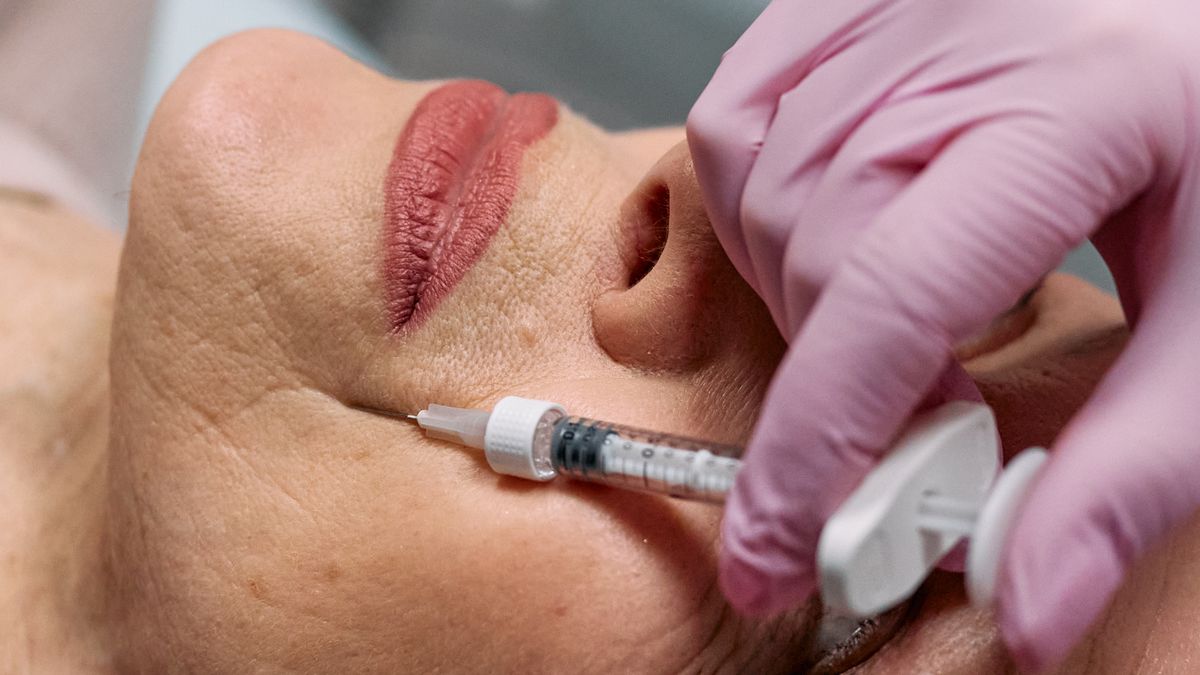
Botox, filler, and laser safety for patients: who can legally perform them
Last updated
Patient guide to who can legally perform Botox, dermal fillers, lasers, IPL, and microneedling by credential, what safety equipment should be in the room, and when medical supervision is required.
Patients often hear confusing titles inside aesthetic clinics: "master injector," "medical esthetician," "laser specialist," or "certified aesthetic technician." None of those titles tells you whether the person holding a syringe or firing a laser has a legal healthcare license in your state. Because Botox, dermal fillers, and Class IIIb/IV lasers carry distinct biological and physical risks, state laws regulate each treatment by the operator's actual license, training, and physician oversight.
This guide explains what patients should know about who can legally perform common med spa procedures, what safety checks belong in the treatment room, and how to look up exact rules on your state med spa page. For clinic-side delegation frameworks, owners can also read who can inject Botox and fillers and laser, IPL, and microneedling rules.
Why credential rules matter for your body
Each aesthetic modality carries real medical risks if placed in the wrong hands:
- Neurotoxins (Botox, Dysport, Xeomin, Jeuveau, Daxxify): These are prescription biological drugs containing botulinum toxin type A. Incorrect dosing, poor anatomical placement, counterfeit vials, or non-sterile dilution can cause eyelid drooping (ptosis), asymmetric smiles, swallowing problems, or systemic toxin spread as outlined in the FDA BOTOX Medication Guide.
- Dermal fillers (hyaluronic acid and biostimulators): Under FDA device rules, dermal fillers are implantable medical devices. Injecting into or compressing an artery can block blood flow (vascular occlusion), causing skin necrosis, scarring, stroke, or permanent blindness if not treated immediately.
- Medical lasers and IPL: FDA medical laser guidance notes that high-output lasers and intense pulsed light devices deliver concentrated thermal energy capable of burning skin, triggering severe hyperpigmentation, scarring, or causing permanent retinal damage without wavelength-matched eye protection.
Who can perform Botox and dermal fillers
Across the United States, state medical, nursing, dental, and physician assistant boards decide injection authority:
- Physicians (MD and DO): Authorized to evaluate patients, prescribe neurotoxins and fillers, and inject in all 50 states.
- Nurse Practitioners (NPs / APRNs) and Physician Assistants (PAs): Authorized to evaluate patients and inject in nearly every state, subject to state collaboration, supervision, or full-practice-authority rules.
- Registered Nurses (RNs): In most states, RNs may inject Botox or dermal fillers only after an authorized prescriber (MD, DO, NP, or PA) performs a Good Faith Exam and issues a patient-specific order, and under required physician supervision. A few states are stricter on specific procedures or supervision distance; always verify on your state page.
- Dentists (DDS / DMD): Many states permit dentists to inject neurotoxins and fillers within the oral and maxillofacial region, while other states limit cosmetic facial injections outside dental care, check your state dental and medical boards.
- Estheticians, cosmetologists, and unlicensed medical assistants: Prohibited from injecting prescription neurotoxins or dermal fillers nationwide.
Before letting anyone inject you, ask to see the unopened or clearly labeled manufacturer vial or syringe box, confirm the brand name is on the FDA-approved filler or neurotoxin lists, and check that sterile single-patient needles and syringes are opened in front of you in accordance with CDC injection safety rules.
Who can perform laser hair removal, IPL, and resurfacing
Laser and IPL delegation varies more sharply between states than injectables do. Broadly, states fall into three patterns:
- Medical-license states: States like California and Florida treat cosmetic lasers and IPL devices as medical procedures that estheticians and unlicensed technicians cannot perform, restricting operation to physicians, NPs, PAs, or supervised RNs (with Florida also regulating electrologists under laser hair removal protocols).
- Certified laser-technician states: States like Texas and Arizona maintain dedicated laser hair removal technician certifications, continuing-education hours, and facility registrations with medical-director oversight, while keeping ablative skin-resurfacing lasers restricted to physicians or advanced clinicians.
- Delegation-with-training states: Some states allow trained staff to operate non-ablative hair-removal or IPL devices under documented physician protocols and on-site or general supervision, while reserving ablative CO2 or erbium lasers for physicians.
The FDA has also warned consumers about clinics and sellers using cheap, unapproved, or misbranded laser equipment imported online. Before any laser or IPL treatment, confirm:
- Both you and the operator wear wavelength-specific safety goggles or shields rated for that exact machine.
- The operator asks about recent sun exposure, tanning, pregnancy, herpes history, and photosensitizing prescriptions (like isotretinoin or doxycycline).
- The treatment room door has safety signage and covered windows so accidental reflections cannot reach bystanders.
- A test spot is offered if you have darker skin tones (Fitzpatrick IV–VI) or are trying a new wavelength.
Who can perform microneedling and chemical peels
Patients are often surprised to learn that "microneedling" and "chemical peels" can jump from salon care to regulated medicine depending on depth and device classification:
- Superficial cosmetic microneedling and light peels: Many cosmetology boards allow licensed estheticians to perform superficial exfoliating peels that remain within the uppermost dead layer of skin (stratum corneum) and cosmetic rollers that do not pierce living dermis or draw pinpoint bleeding.
- Medical microneedling, RF microneedling, and medium-to-deep peels: Motorized FDA-cleared microneedling pens that penetrate into the dermis, radiofrequency (RF) microneedling devices, platelet-rich plasma (PRP) blood draws, and medium or deep chemical peels (such as TCA or phenol) are widely treated as medical procedures requiring medical licensure or physician delegation.
Always ask what needle depth or acid percentage is planned, whether blood will be drawn (for PRP), and whether the operator's state license covers that depth.
What should always be in the treatment room
Whether you are getting lip filler, laser hair removal, or RF microneedling, a compliant room includes:
- Visible hand hygiene supplies, medical gloves, and rigid red sharps containers.
- Sealed, single-use needles and cannulas rather than re-used supplies.
- Manufacturer-labeled drugs and FDA-cleared devices.
- Emergency supplies, especially hyaluronidase on hand whenever hyaluronic acid dermal fillers are injected, plus antiseptic prep and post-care written instructions.
- Access to an active supervising physician or prescribing clinician if a complication starts.
If any of these basics is missing, pause the appointment. You can review more preparation checklists in questions to ask before booking and our glossary.
Quick credential and safety summary by treatment
Before booking any treatment, match the procedure you want against the license types that commonly hold authority and the primary safety checks to verify in the room:
- Botox, Dysport, Xeomin, Jeuveau, Daxxify: Performed by MDs, DOs, NPs, PAs, and (under prescriber order and required physician supervision) RNs in most states, plus dentists within state dental-board limits. Never performed by estheticians or unlicensed medical assistants. Verify the sealed manufacturer vial, unit count, and Good Faith Exam.
- Dermal fillers (hyaluronic acid, calcium hydroxylapatite, PLLA): Performed by MDs, DOs, NPs, PAs, and supervised RNs where state law allows. Verify that the syringe comes out of a sealed manufacturer box, that it is on the FDA-approved dermal filler list, and that hyaluronidase is physically stocked in the clinic for hyaluronic acid fillers.
- Ablative lasers (CO2, Erbium) and deep resurfacing: Usually restricted to physicians (or narrow NP/PA supervision in select states) because thermal injury depth reaches the dermis and carries scarring and infection risks.
- Non-ablative lasers, IPL, and laser hair removal: Regulated by state; restricted to physicians, NPs, PAs, and supervised RNs in states like California, delegated to certified laser technicians in states like Texas, or covered under electrologist and medical supervision rules in states like Florida. Always insist on wavelength-specific safety goggles and a recent sun-exposure check.
- Cosmetic superficial peels and superficial facials: Generally within a licensed esthetician's scope when formulas stay in the dead outer skin layer and avoid medical depth.
Why "medical esthetician" is not a state license
Many patients book a laser resurfacing or deep microneedling appointment after seeing the title "medical esthetician" or "paramedical aesthetician" on a med spa bio page. Almost no state board issues a separate license called "medical esthetician." In practice, the title usually means a licensed cosmetologist or esthetician who works inside a medical office or took a short private device workshop. Even inside a physician's clinic, a licensed esthetician still cannot exceed the esthetician scope written into state statute and board rules, for instance, they still cannot inject prescription drugs or draw blood for platelet-rich plasma (PRP) unless state law separately authorizes them under a qualifying clinical credential. Always look up the underlying state license rather than relying on job titles.
Pre-treatment questions for the treatment room
Right before the procedure starts, ask three fast room-level questions:
- "Can I see the unopened syringe box, vial label, or laser handpiece model before we begin?"
- "Who evaluated my health history and approved today's dose or energy settings?"
- "What symptoms during the first 72 hours mean I should call you immediately or go to an urgent care or emergency room?"
A safe clinician welcomes those questions and documents your answers directly in your chart. If you notice hesitation, pre-drawn unlabeled syringes, or missing eye protection, review red flags of an unsafe med spa and cancel before treatment starts.
Sources
Free checklist · PDF
Med Spa Startup Checklist
A one-page checklist to help you review the basics before you open, hire, delegate, or advertise.
Free. We email you the download link, plus an occasional plain-English guide. Unsubscribe any time. We never sell your email. Privacy