Laser safety in a med spa: the laser safety officer role and ANSI Z136.3
Last updated · 11 min read
How ANSI Z136.3 defines the laser safety officer in a med spa, what controls belong in the room, and why state rules vary from Texas to New York.
A med spa should treat laser safety as a formal clinical program, not a loose set of room rules. ANSI Z136.3-2024 is the main healthcare laser standard, and it says the standard applies to salons and spas as well as medical offices, and that every facility and practice scenario shall designate a laser safety officer with authority to evaluate hazards, monitor controls, and stop use if the controls are not adequate. (webstore.ansi.org)
What ANSI Z136.3 means in a med spa
ANSI describes Z136.3-2024 as the definitive document on laser safety in health care environments. It covers diagnostic, cosmetic, preventive, and therapeutic applications, and it is intended for everyone involved with installation, use, operation, maintenance, and service of a health care laser system. For a med spa, that matters because the standard is not limited to hospitals or operating rooms. A treatment room in a strip mall is still a laser worksite if a health care laser system is being used as a medical device. The standard also says it forms the foundation for facility policies, education, training, and best practices. (webstore.ansi.org)
The practical takeaway is simple. A med spa does not get to rely on a device manual alone or on the idea that a nurse or physician has used lasers before. The standard expects a written safety program, a designated LSO, and controls that match the laser class and the procedure being done. That is why laser policy belongs in the same planning bucket as how to start a med spa, med spa ownership and CPOM/MSO, and hiring a med spa medical director. (webstore.ansi.org)
What the laser safety officer actually does
The laser safety officer is the person who runs the laser safety program. In the ANSI sample appendix, the LSO is the individual designated by management to evaluate and control laser hazards, monitor and enforce those controls, and suspend, restrict, or terminate laser operation if hazard controls are inadequate. The LSO can be a part-time role, and the standard says the LSO may be the laser user, the laser operator, or another trained person with the right authority. (assets.lia.org)
That role is broader than hanging a warning sign on the door. The LSO is responsible for hazard classification, hazard evaluation before the laser is used, and hazard response if something goes wrong. The LSO also has to make sure lasers and laser systems are labeled correctly, and that any modified equipment has a hazard evaluation on file. In plain English, the LSO is the person who keeps the room, the device, the policy, and the people aligned. (assets.lia.org)
Texas puts that concept into state rule language. Its laser and IPL rule says the registrant must designate a qualified LSO, keep that person performing the LSO duties, and submit LSO qualifications that show education in laser safety or a laser safety officer course, experience with the equipment or services, and knowledge of hazards, emergencies, and response to injury. Texas also says the registrant must notify the department within 30 days if the LSO changes. (dshs.texas.gov)
For a med spa owner, that means the LSO is not a ceremonial title. It is a job description. If the spa uses Class 3B or Class 4 devices, the LSO should be the person who knows where the eyewear is stored, who is allowed into the controlled area, how the plume is evacuated, what to do after an eye exposure or burn, and what documentation has to be kept after an event. (dshs.texas.gov)
The controls that belong in the room
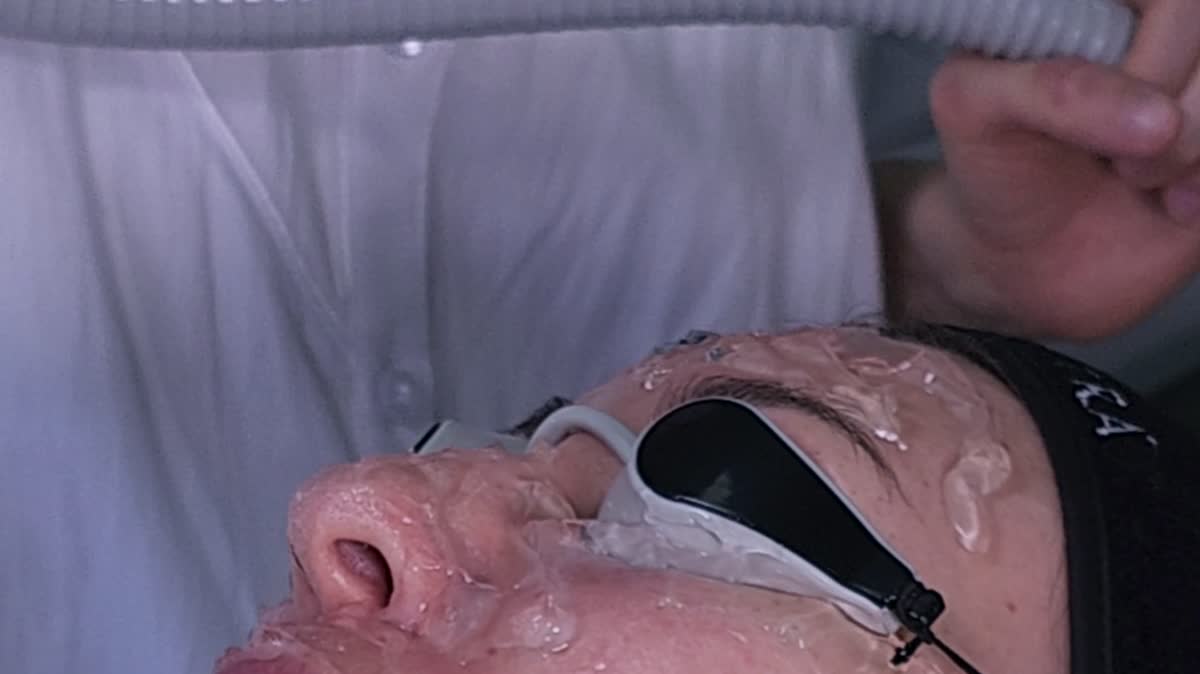
Laser treatment rooms need controls for the beam, the eye, the skin, the air, and the people who enter the room. OSHA says Class 4 lasers are a hazard to the eye and skin from the direct beam, may pose a diffuse reflection or fire hazard, and may also produce laser-generated airborne contaminants and hazardous plasma radiation. OSHA also lists common medical laser classes and points readers to the ANSI Z136 series for controls and work practices. (osha.gov)
One of the biggest overlooked risks is plume. OSHA says laser-generated airborne contaminants can contain gaseous toxic compounds, bioaerosols, dead and live cellular material, and viruses. CDC likewise says laser plumes and surgical smoke are a potential risk for health care workers because the heated plume can include particles, gases, tissue debris, and offensive smells, and aerosolized infectious material may reach nearby personnel. In a med spa, that means local exhaust ventilation or a smoke evacuator is not an optional upgrade if the procedure vaporizes tissue. (osha.gov)
OSHA also describes the core controls that should be built into the room. Those controls include laser protective eyewear marked with optical density and wavelength, warning signs on doors to the laser treatment controlled area, trained maintenance technicians, proper alignment and calibration, local exhaust ventilation with a smoke evacuator or in-line filter, and barriers or filters that keep transmitted radiation below the applicable maximum permissible exposure. (osha.gov)
ANSI also treats signage and training as part of the safety system, not as afterthoughts. The standard says the LSO should be part of a program that includes education and training, and it expects control measures to match the hazard class. Texas mirrors that structure by requiring the LSO to make sure users are trained, and by requiring records, inventories, and written reports for injuries, medical events, stolen units, and other changes. (assets.lia.org)
The federal layer behind the device
FDA rules are aimed at the product side, but a med spa should still care about them because a treatment room depends on a device that must be properly certified and labeled. FDA says manufacturers of laser products must certify that the product complies with FDA performance standards, and that certification must appear on a label or tag on the product. FDA also says that certification must be based on testing or on a testing program that follows good manufacturing practice. (fda.gov)
OSHA adds the workplace side. OSHA says all medical lasers are regulated, that federal regulations require manufacturers to classify the laser system based primarily on eye and skin hazard, and that health care laser safety programs should use recognized controls and work practices. For a med spa, that means device choice, staff training, room setup, and air handling all sit on top of a regulated product. (osha.gov)
A practical planning question is whether the room uses a device that is only for hair reduction or a device that can cut, ablate, or vaporize tissue. That choice affects supervision, training, plume control, eyewear, and the need for written protocols. If the spa also offers injectables or other medical services, it should be reviewed alongside who can inject Botox and fillers, med spa laser, IPL and microneedling rules, and HIPAA, OSHA and medical waste compliance. (fda.gov)
How state rules differ
State law does not line up neatly from one border to the next, and the differences are large enough to change staffing, ownership, and the way a laser room is run. Texas requires a certificate of registration for Class 3B and Class 4 lasers or laser services, while also saying Class 1, Class 2, Class 3a or 3R lasers and IPL devices are not required to be registered. Texas also requires a designated qualified LSO and written reporting for injuries and other events. (dshs.texas.gov)
California takes a tighter clinical approach. The Medical Board says physicians may use lasers or intense pulse light devices to remove hair, spider veins, and tattoos, and physician assistants and registered nurses may do so under a physician's supervision. The same FAQ says a layperson cannot legally serve as the medical director for a med spa that offers laser and other cosmetic medical services, and that the business must be a physician-owned medical practice or professional medical corporation with a physician as the majority shareholder. (mbc.ca.gov)
Florida layers supervision and registration together. Florida law says protocols for electrolysis or electrology using laser or light-based hair removal or reduction by persons other than physicians require the person performing the service to be appropriately trained and to work only under the direct supervision and responsibility of a physician licensed under the statute. Florida also says no person may use a Class III or Class IV laser device or product unless the registration rules with the department have been followed. (wwwo.leg.state.fl.us)
New York draws a different line. Its procedure chart places laser hair removal under cosmetology or esthetics, but says laser procedures other than hair removal are medical. The same chart says IPL used for hair removal may be performed by a cosmetologist or esthetician, while other IPL uses are classified differently. That makes New York a good example of why a spa should never assume that one state's laser rule will work in another. (dos.ny.gov)
If the business is being built from scratch, this is where states, Texas, California, Florida, and New York matter more than a generic national checklist. The same device, the same service menu, and the same nurse can trigger different licensing, supervision, and ownership questions depending on the state. (dshs.texas.gov)
Worked example, a nurse opening a laser room in Ohio
Say a nurse in Ohio wants to add tattoo removal and IPL hair reduction to a small practice room. The first step is not to buy a device or print a brochure. The first step is to decide whether the state treats the service as medicine, who may perform it, what supervision is required, and whether the device class requires registration or a named safety officer. The reason to start there is that state approaches vary widely, and the Texas, California, Florida, and New York examples show that the answer can change from one state to the next. (dshs.texas.gov)
Once the legal line is clear, the room gets built around the risk. A class 4 device calls for eyewear matched to the wavelength, a controlled area with signs, plume evacuation if tissue is vaporized, trained staff, and a written response plan for eye exposure, skin injury, or device malfunction. The LSO should also make sure the treatment room has a short list of who may enter, who may operate the device, where the eyewear is stored, and who signs off on maintenance and calibration. (osha.gov)
That same nurse should also put the laser policy next to the rest of the med spa file, not inside a device box. The policy should sit with the medical director agreement, the scope-of-practice memo, the training file, the emergency plan, and the equipment inventory. A startup pass through med spa startup costs and equipment and the med spa startup checker helps keep the laser purchase from outrunning the rest of the compliance work. (webstore.ansi.org)
Launch checklist for a med spa laser program
- Confirm the state rule on who may perform the service, who may supervise, and whether the device or facility must be registered. Texas, California, Florida, and New York do not use the same model. (dshs.texas.gov)
- Designate an LSO in writing and make sure the person has the training, experience, and authority to stop use when controls are not adequate. (assets.lia.org)
- Classify every device and keep the manufacturer label, registration record, and inventory sheet with the safety file. Texas requires inventory records and notices for changes to the LSO, location, and device count. (dshs.texas.gov)
- Post warning signs on the treatment room or controlled area doors and remove or cover them when the device is not in use. (osha.gov)
- Buy eyewear for the specific wavelength in use and keep the optical density and wavelength marking on file. (osha.gov)
- Use local exhaust ventilation or a smoke evacuator with an in-line filter when the procedure creates plume or airborne contaminants. CDC and OSHA both point to plume control. (osha.gov)
- Train every user, operator, and support person on the exact device and procedure they will touch, not just on a generic laser safety video. (assets.lia.org)
- Keep incident reporting, maintenance, calibration, and event logs in one place, especially if your state requires reporting within a set time after injury, device loss, or a medical event. Texas requires written reporting for injuries and other events involving Class 3B or Class 4 lasers. (dshs.texas.gov)
- Review the laser workflow with the rest of the med spa compliance stack, including med spa laser, IPL and microneedling rules, who can inject Botox and fillers, and HIPAA, OSHA and medical waste compliance. (webstore.ansi.org)
Confirm your laser policy with your state board and a healthcare attorney before you buy the device or open the room. (dshs.texas.gov)
Frequently asked questions
Does every med spa need a laser safety officer?
ANSI Z136.3 says all facilities and practice scenarios shall designate an LSO. The standard also says the LSO has authority to evaluate and control hazards and to suspend, restrict, or terminate laser operation if controls are inadequate. State rules may add their own labels, qualifications, or registration steps, but the LSO concept itself is built into the healthcare laser standard. (assets.lia.org)
Is the laser safety officer the same person as the medical director?
Not necessarily. The better reading is that these are separate functions. The LSO runs the laser safety program, while state medical director, supervision, and ownership rules deal with who may practice medicine, who may supervise, and how the business may be structured. California, Florida, Texas, and New York show that those questions are handled differently by state law, so the LSO should not be treated as a substitute for physician oversight or state supervision rules. (assets.lia.org)
Can a nurse or esthetician use lasers in a med spa?
It depends on the state and on the service. California allows physicians to use lasers or intense pulse light devices for hair, spider veins, and tattoos, and allows physician assistants and registered nurses to do so under physician supervision, but not cosmetologists or estheticians. Florida requires direct supervision and responsibility for nonphysicians doing laser or light-based hair removal or reduction. New York treats laser hair removal differently from other laser procedures. Texas requires registration for Class 3B and Class 4 laser services and a qualified LSO. (mbc.ca.gov)
What paperwork should a med spa keep for laser compliance?
Keep the device classification or label, the LSO designation, training records, room signage plan, eyewear specs, maintenance and calibration records, inventory logs, and any required incident or injury reports. Texas is a good example of how detailed this file can become, because it requires inventory records, LSO qualification records, and written notices for changes and injuries. A clean laser file also makes it easier to keep the laser program aligned with the rest of the business records. (dshs.texas.gov)
Sources
- ANSI Z136.3-2024 - Safe Use of Lasers in Health Care
- eTool : Hospitals - Surgical Suite - Laser Hazards | Occupational Safety and Health Administration
- C. Air | Infection Control | CDC
- Laser Products - Conformance with IEC 60825-1 Ed. 3 and IEC 60601-2-22 Ed. 3.1 (Laser Notice No. 56)
- 289.301 Radiation Requirements for Lasers and IPL Devices
- FAQs | Medical Board of California
- Chapter 501 Section 122 - 2026 Florida Statutes - The Florida Senate
- Procedure Licensure Chart | Department of State
Free checklist · PDF
Med Spa Startup Checklist
A one-page checklist to help you review the basics before you open, hire, delegate, or advertise.
Free. We email you the download link, plus an occasional plain-English guide. Unsubscribe any time. We never sell your email. Privacy